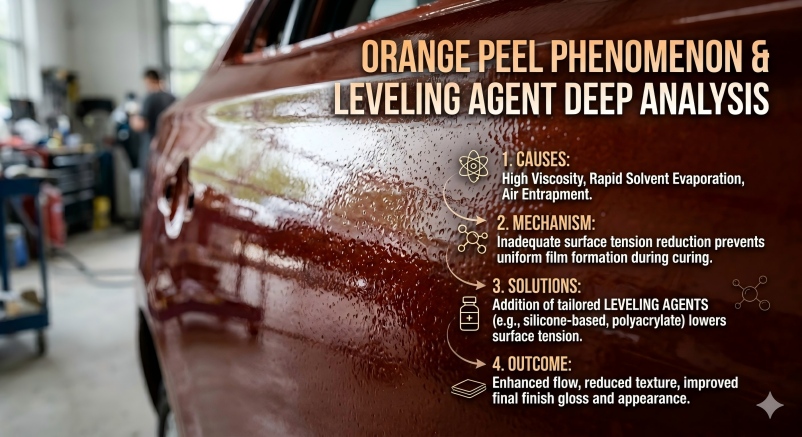
- Color paste
CP Factory Color Matching Series Pigments
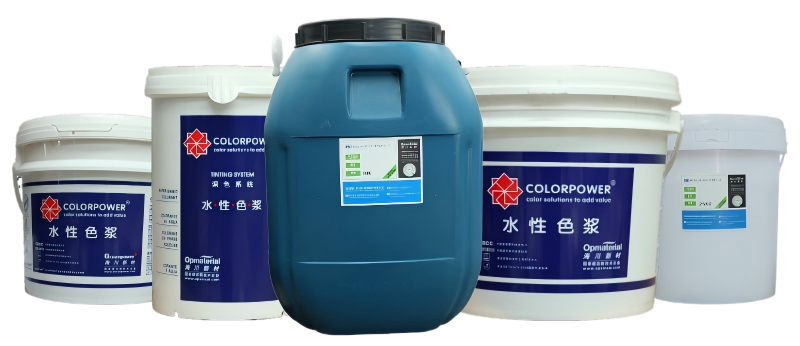
- auxiliary agent
auxiliary agent
Dispersant Dosage Paradox: Optimize Polymeric Dispersants in Coatings

Meta Description
Understand the dispersant dosage paradox and flocculation trap in coatings. Learn data-driven methods to find the optimal dispersant dosage and improve pigment dispersion stability.
H1
The Dispersant Dosage Paradox: How to Optimize Polymeric Dispersants in Coatings
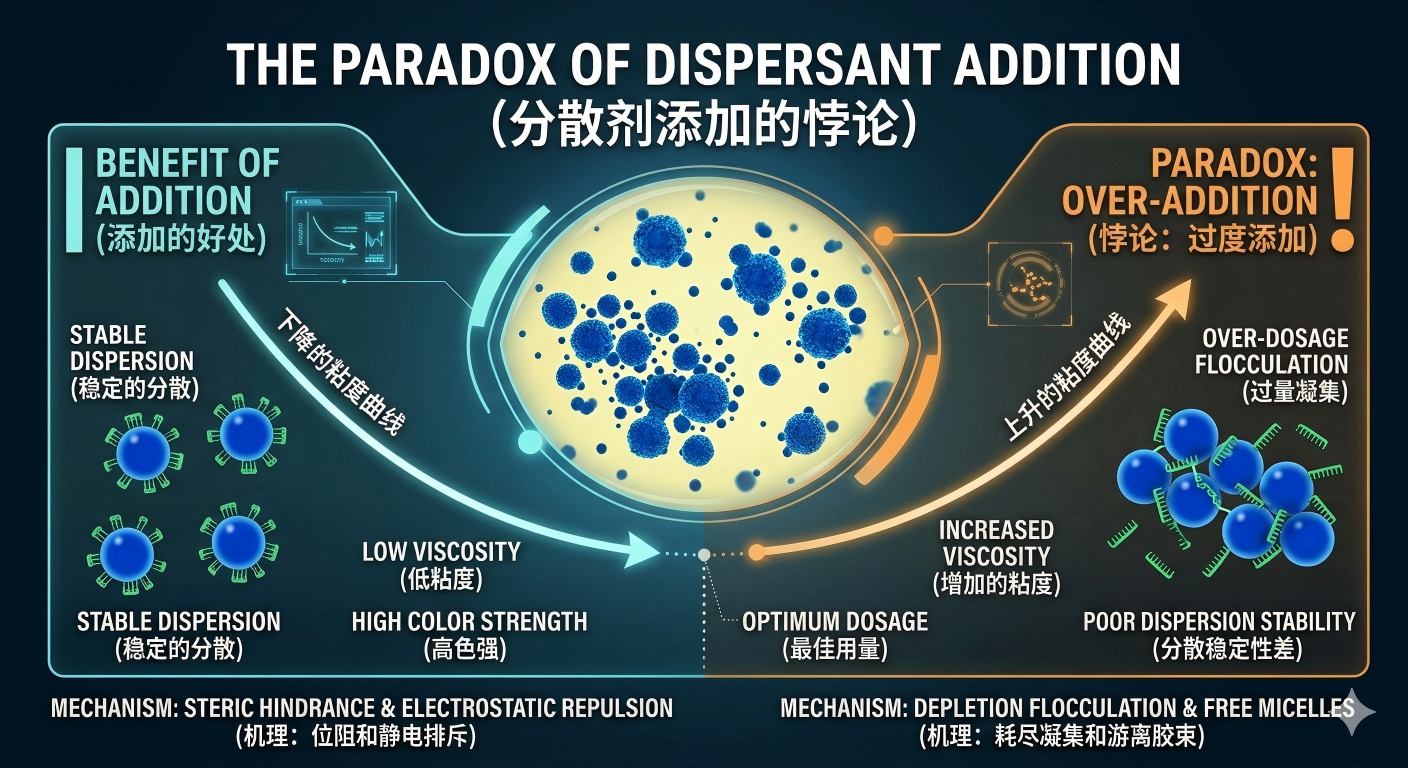
In coatings formulation, achieving stable pigment dispersion is essential for product performance, appearance, and storage stability. One of the most confusing challenges for formulators is the dispersant dosage paradox: using too little dispersant leads to flocculation, while using too much dispersant also causes system instability. This article explains the science behind the flocculation trap and provides practical steps to determine the optimal dispersant dosage for coating systems.
What Are Polymeric Dispersants and Their Industrial Applications
【 polymeric dispersants】 are high-performance additives widely used in modern coatings, inks, and pigment-based formulations. Interestingly, these advanced materials were not originally developed for the coatings industry.
In the 1950s, polymeric dispersants first appeared in aerospace and defense applications to stabilize solid rocket fuels. Over time, their use expanded into biomedicine for drug delivery systems. Eventually, their excellent dispersion properties made them indispensable in the coatings industry. Today, polymeric dispersants play a key role in architectural coatings, industrial coatings, and high-performance pigment dispersion systems.
Working Principle: Steric Stabilization in Pigment Dispersion
The effectiveness of polymeric dispersants relies on a core mechanism called steric stabilization.
Polymer chains from the dispersant adsorb onto the surface of pigment particles, forming a protective physical layer. This layer prevents pigment particles from approaching each other closely, avoiding aggregation caused by van der Waals forces. With sufficient steric stabilization, pigments remain evenly dispersed, ensuring consistent coating quality and dispersion stability
Anchoring Groups: The Key to Dispersant Adsorption
At the molecular level, the performance of a dispersant depends heavily on its anchoring groups. These groups act like an anchor to attach polymer chains firmly to pigment surfaces.
There are two main adsorption mechanisms:
Chemisorption: Forms strong chemical bonds such as ionic or covalent bonds, providing stable and irreversible adsorption.
Physisorption: Uses weak interactions including hydrogen bonding and van der Waals forces, resulting in reversible attachment.
Matching the right anchoring group to the pigment’s surface chemistry is critical for effective dispersion.
The Flocculation Trap: Why Too Much or Too Little Dispersant Fails
The 【flocculation trap】 describes a common issue in 【 coatings formulation】: both under-dosing and over-dosing of dispersants lead to dispersion failure. Many formulators assume higher dosage delivers better stability, but this is not true. The two failure modes have completely different mechanisms.
Under-Dosing: Protection Failure
Insufficient dispersant cannot form a complete protective layer on pigment surfaces. Exposed particles attract each other to reduce surface energy, causing rapid flocculation and poor dispersion.
Over-Dosing: Interference Failure
Excess dispersant molecules that fail to adsorb onto pigments become destabilizing agents. This can cause:
Bridging flocculation: Free dispersant chains connect multiple particles, pulling them together.
Entropy-driven flocculation: High concentrations of free dispersant restrict chain movement, pushing particles to aggregate.
In both cases, the coating system loses stability and performance.
How to Determine the Optimal Dispersant Dosage
Finding the optimal dispersant dosage requires a scientific, data-driven approach rather than trial and error. Follow these key steps.
1. Characterize Pigment Properties
First, analyze important pigment parameters:
Specific surface area (measured by BET)
Surface chemistry (acidic or basic)
These values determine the required dispersant dosage and suitable anchoring groups.
2. Select the Right Polymeric Dispersant
Choose a dispersant that matches the pigment’s surface characteristics and the coating resin system. Compatibility directly affects dispersion efficiency.
3. Test and Verify Optimal Dosage
Use professional testing methods to identify the best dosage:
Adsorption isotherms to determine full surface saturation.
Rheological testing where the lowest viscosity indicates optimal dispersion.
Laser diffraction particle size analysis for the smallest and most uniform particle size.
Storage stability testing to confirm long-term performance.
Future Trends: AI and Machine Learning for Dispersant Optimization
With advances in computational chemistry, machine learning, and artificial intelligence, researchers are developing predictive models for dispersant dosage. These models can recommend the optimal dosage for specific pigments and resin systems, reducing development time and eliminating repetitive testing.
In the near future, AI-assisted formulation will become a powerful tool for coatings manufacturers to improve efficiency and product consistency.
Conclusion
The dispersant dosage paradox is a classic challenge in coatings formulation. Understanding the flocculation trap, steric stabilization, and anchoring mechanisms helps formulators avoid common mistakes. By using data-driven testing methods to determine the optimal dispersant dosage, manufacturers can achieve stable pigment dispersion, improve coating performance, and reduce production issues.
Optimizing dispersant dosage is essential for creating high-quality, stable, and consistent coatings for architectural, industrial, and specialty applications.